
This Blog shares experimental content for learning and exploration, without commercial intent. It's not responsible for copyright issues, as materials are for educational use only. Engage respectfully with copyright laws for personal growth.
Given an array of positive integers arr, find the maximum product of any contiguous subarray that forms a palindrome. A subarray is palindromic if it reads the same forward and backward (e.g., [2, 3, 2] or [5]). If no palindromic subarray exists, return -1. Return the result modulo 10^9 + 7 to handle large products.
Requirements:
- Subarray must have at least one element.
- Compute the product of all elements in the palindromic subarray.
- Handle edge cases: empty array or no palindromic subarrays.
Example:
Input: arr = [2, 3, 2, 4]
Output: 12
Explanation: Palindromic subarrays are [2], [3], [2], [2, 3, 2]. Products: 2, 3, 2, 12 (2*3*2). Maximum is 12.
Input: arr = [1, 2, 3]
Output: 3
Explanation: Palindromic subarrays are [1], [2], [3]. Products: 1, 2, 3. Maximum is 3.
Input: arr = [4, 5, 4, 5]
Output: 80
Explanation: Palindromic subarrays include [4], [5], [4], [5], [4, 5, 4]. Maximum product is 4*5*4=80.
Input: arr = []
Output: -1
Constraints:
- 0 <= arr.length <= 100
- 1 <= arr[i] <= 100
- Time Complexity: Aim for O(n^2).
- Space Complexity: O(1) excluding input.

Why It’s Tricky: Identifying palindromic subarrays requires checking each subarray’s symmetry while computing products under modulo constraints. The problem is approachable with nested loops but challenges you to handle edge cases and optimize for efficiency.
Resources to Solve It:
- GeeksforGeeks: Palindrome Substring Queries – Explore palindrome checking techniques.
- HackerRank: Palindrome Subarray Problems – Practice similar array-based challenges.
- LeetCode: Maximum Product Subarray – Tackle a related problem for deeper understanding.
Try solving this problem and test your DSA skills! Share your approach or check the linked resources for guidance.
Google Gemini's Personal Context: Your AI, Your Life
Revealed at Google I/O 2025, Google Gemini's Personal Context feature transforms how AI interacts with your daily life.
By securely accessing data from Google apps like Gmail, Google Drive, Calendar, and even Photos—with your explicit permission—Gemini delivers highly personalized responses tailored to your unique needs.
Imagine Gemini suggesting a Smart Reply in Gmail that perfectly matches your tone, pulling up a relevant file from Drive for a meeting, or reminding you of an upcoming event from Calendar with actionable suggestions.
Dive deeper into this innovation at Google's Gemini Blog.

Why This Update Changes Everything
Personal Context turns Gemini into a proactive assistant that anticipates your needs by understanding your habits and preferences across Google’s ecosystem.
Whether it’s drafting emails based on your writing style, organizing tasks by cross-referencing Calendar and Docs, or suggesting edits to a presentation stored in Drive, Gemini makes your workflow seamless.
Robust privacy controls ensure you decide exactly what data Gemini can access, giving you full control over your information.
Learn how to customize these settings at Google Account Help.


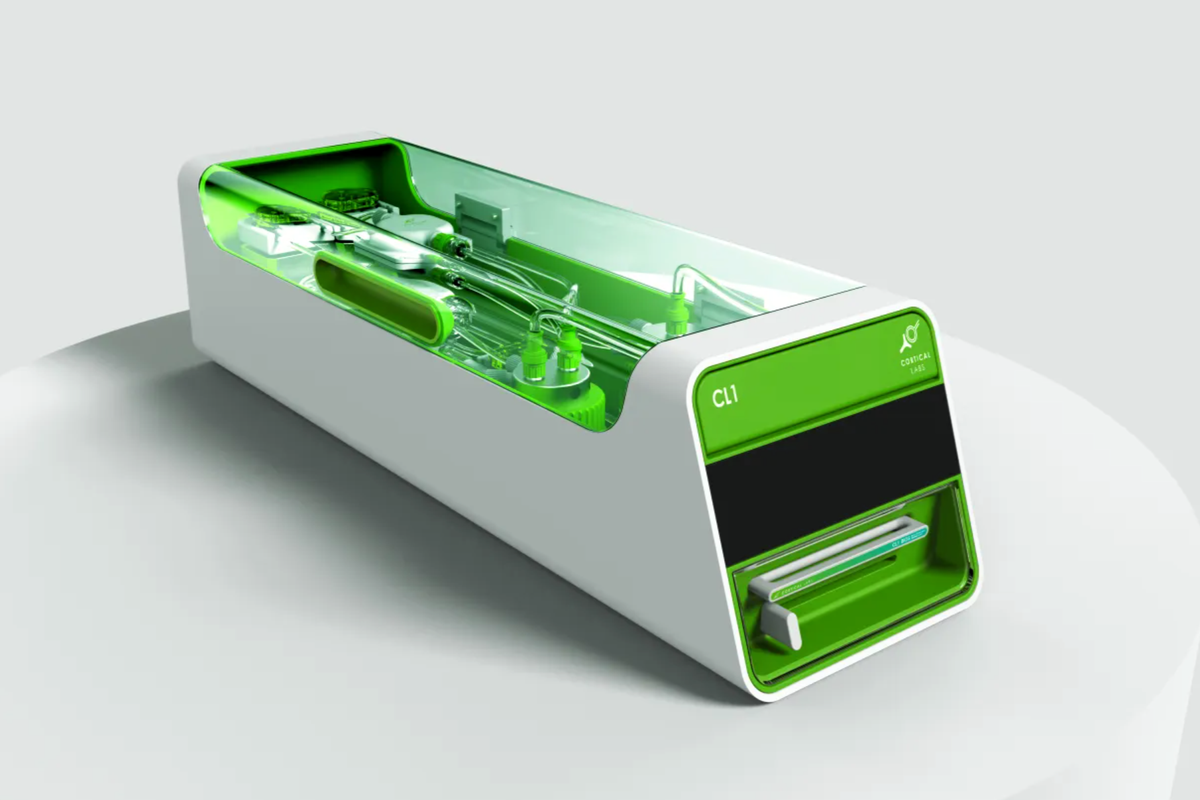
In 2025, computing crossed a historic line. Scientists and engineers introduced CL1 , the first commercially usable biological...